How High-Quality Solar Cables Boost System Efficiency and Lifespan
Solar panels, inverters, combiner boxes, and mounts are the cool, flashy, and most talked-about parts of a photovoltaic (PV) system-but the silent hero cable that links them is a very significant one.
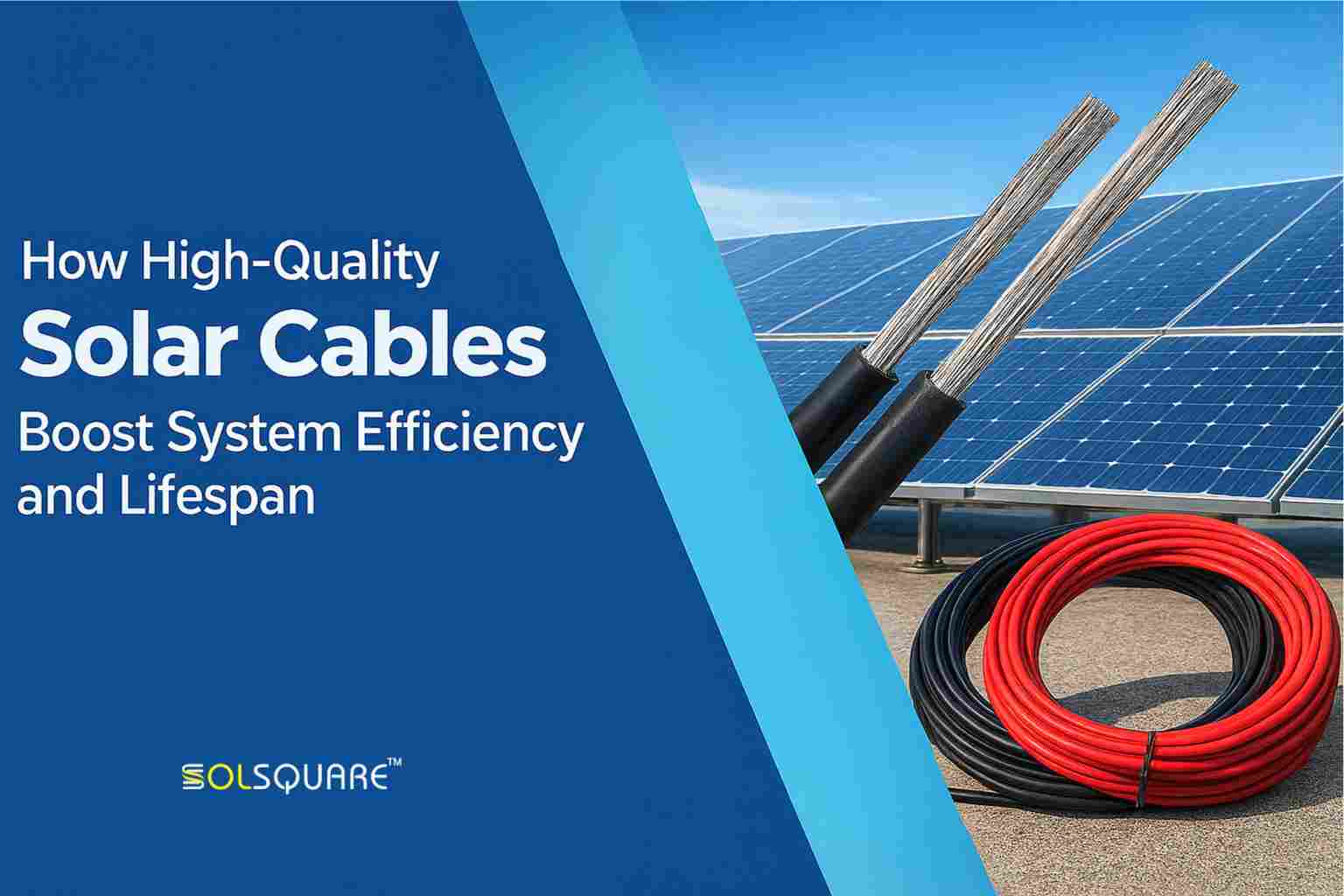
Solar panels, inverters, combiner boxes, and mounts are the pretty, talked-about parts of a photovoltaic (PV) system-but the unassuming cable that connects them plays a very significant role. Selecting top-of-the-line solar cables is not a “nice-to-have” feature; it is a very important performance and lifetime decision. Proper cabling lowers the energy loss, keeps the system from breaking down, makes the system easy to maintain, and also gives it a sort of 'immune system' against nature's stressors. This piece of writing serves as an explanation of how premium PV cables make those improvements, the reasons for choosing them, and the principals for their installation and upkeep.
Why cable quality matters (simple physics)
Electricity travels through conductors and encounters resistance. Power lost as heat in a conductor is given by the well-known formula:
P_loss = I² * R
That means losses rise with the square of current - so small improvements in resistance can yield meaningful efficiency gains, particularly on high-current runs.
However, efficiency is just one side of the story. The long-term reliability aspect is still there and it is very much influenced by the choice of materials and the way the product is built: for example, insulation that can endure UV and temperature variations, conductors that are resistant to corrosion, and joints that can remain both mechanically and electrically stable for several decades. If you fail to meet any of these conditions, then you will have to contend with hot spots, voltage drops, insulation breakdown, or open circuits-all of which not only reduce the lifespan of the system but also increase the cost of maintenance.
What “high-quality” solar cables actually mean
A high-quality solar cable is more than just thick copper. Key attributes include:
1. Conductor material and construction
From the copper side, the product should be made either of tinned copper or copper of very high purity, annealed. Tinning makes the product more resistant to corrosion as well as more solderable, which is a great advantage if the component is installed in a coastal or humid environment.
Furthermore, if the conductor is a stranded one (made up of a number of fine strands), then it will have mechanical flexibility and will be able to withstand fatigue caused by vibration and thermal cycling.
2. Low electrical resistance per unit length
Lower resistance reduces I²R losses and voltage drop. Using the correct size of conductors (based on current and distance) will minimize losses and make sure that the inverter or MPPT is operating within the voltage ranges for which it is intended.
3. Robust Insulation and Jacketing
As a rule, the materials are cross-linked polyethylene (XLPE), specially formulated UV-stable PVC or other UV- and ozone-resistant polymers.
The insulation should also be able to endure very high continuous DC voltages (usually 600-1500 V in modern PV systems) and a wide range of temperatures.
4. Environmental ratings
Such a cable would be a good fit for the roof and exposed runs if it were resistant to UV, ozone, and possessed low-temperature flexibility.
In case of a fire, if the cable is flame retardant and low-smoke, halogen-free (LSHF), it will be less hazardous to operate.
5. Certification and testing
Firstly, one must check for cables that have been tested to different standards depending on the region, such as IEC 60227/60245, IEC 60364, EN 50618 (for PV DC cables) or UL 4703 / UL 2250. These standards are a door to exposure to UV, temperature, and electrical performance for a long time.
6. Quality terminations and connectors
MC4-compatible connectors, which are properly crimped lugs and sealed junctions, are the most reliable in terms of low-resistance, corrosion-resistant connections. Poor crimps and mismatched connectors are where most failures are.
How high-quality cables increase system efficiency
Lower resistive losses (I²R)
Better conductor sizing and purer copper lower resistance; less energy lost as heat means more reaches the inverter.
Reduced voltage drop
Excessive voltage drop shifts operating points and can reduce the inverter's ability to harvest maximum power, particularly for long string runs or low-voltage systems.
Stable temperature performance
Conductors and insulation that handle higher temperatures without degradation keep resistance stable.
Fewer power-robbing faults
Corrosion, moisture ingress, and deteriorated insulation that cause leakage and losses. Good quality cables resist these failure modes.
Optimized MPPT performance
Bad cabling causes noise and voltage fluctuations that confuse MPPT algorithms, reducing power harvest.
How high-quality cables extend lifespan
UV and weather resistance
Outdoor-rated jacketing prevents cracking and splitting.
Thermal fatigue resistance
High-grade insulation withstands repeated heating and cooling cycles.
Corrosion resistance
Tinned copper and sealed connectors reduce electrochemical corrosion.
Mechanical robustness
Strain reliefs, abrasion-resistant jackets, and proper bend radii prevent damage from installation and environmental stress.
Safer failure modes
Flame-retardant and LSHF materials reduce fire hazards.
Selecting and sizing cables - practical tips
- Size conductor cross-section to keep voltage drop <1-3%.
- Match insulation rating to system Voc + margin.
- Use PV-rated cable for rooftop/exposed environments.
- Use proper MC4 connectors and crimps.
- Follow derating rules for bundled cables.
- Plan conduit size for future expansion.
Installation & maintenance best practices
- Do not bend below manufacturer-specified radii.
- Use UV-resistant clips; avoid rubbing on metal edges.
- Use conduit for exposed runs if possible.
- Weatherproof all junctions.
- Inspect annually: look for discoloration, stiffness, poor connections.
Simple example (why I²R matters) - quick arithmetic
If a string carries 10 A and the round-trip conductor resistance equals 0.1 Ω, the loss is:
P_loss = I² * R = 10² * 0.1 = 10 W
A few watts per string scale into significant yearly losses across multiple runs.
Common mistakes to avoid
- Using non-PV wire on rooftops.
- Undersizing conductors.
- Poor crimping / mismatched connectors.
- Ignoring derating for bundled cables.
- Skipping fire-safety / environmental ratings.
FAQs
Conclusion
Cables are the blood vessels of a PV system-rarely noticed when things work, but disastrous when they fail. Choosing high-quality solar cables ensures higher efficiency, fewer breakdowns, lower fire risk, and longer system life.
Correct cable selection means proper conductor sizing, PV-grade insulation, corrosion resistance, production-tested quality, and reliable connectors. When done right, wiring becomes one of the cheapest ways to increase the yield and lifespan of your solar investment.