What are Multicore Cables and Why Do Solar Installations Need Them?
Explore how multicore cables are the unsung heroes of solar systems—simplifying installation, boosting safety, and increasing performance.
With the increasing demand for efficient and clean solar power, the demand for good-quality and high-performance components in solar installations is also gaining momentum. An oft-forgotten but indispensable component is the multicore cable.
In this article, we will discuss what multicore cables are, how they function, and why the appropriate multicore cable for use in photovoltaic applications can either enhance the efficiency and safety of your photovoltaic system or break the whole thing.
What are Multicore Cables
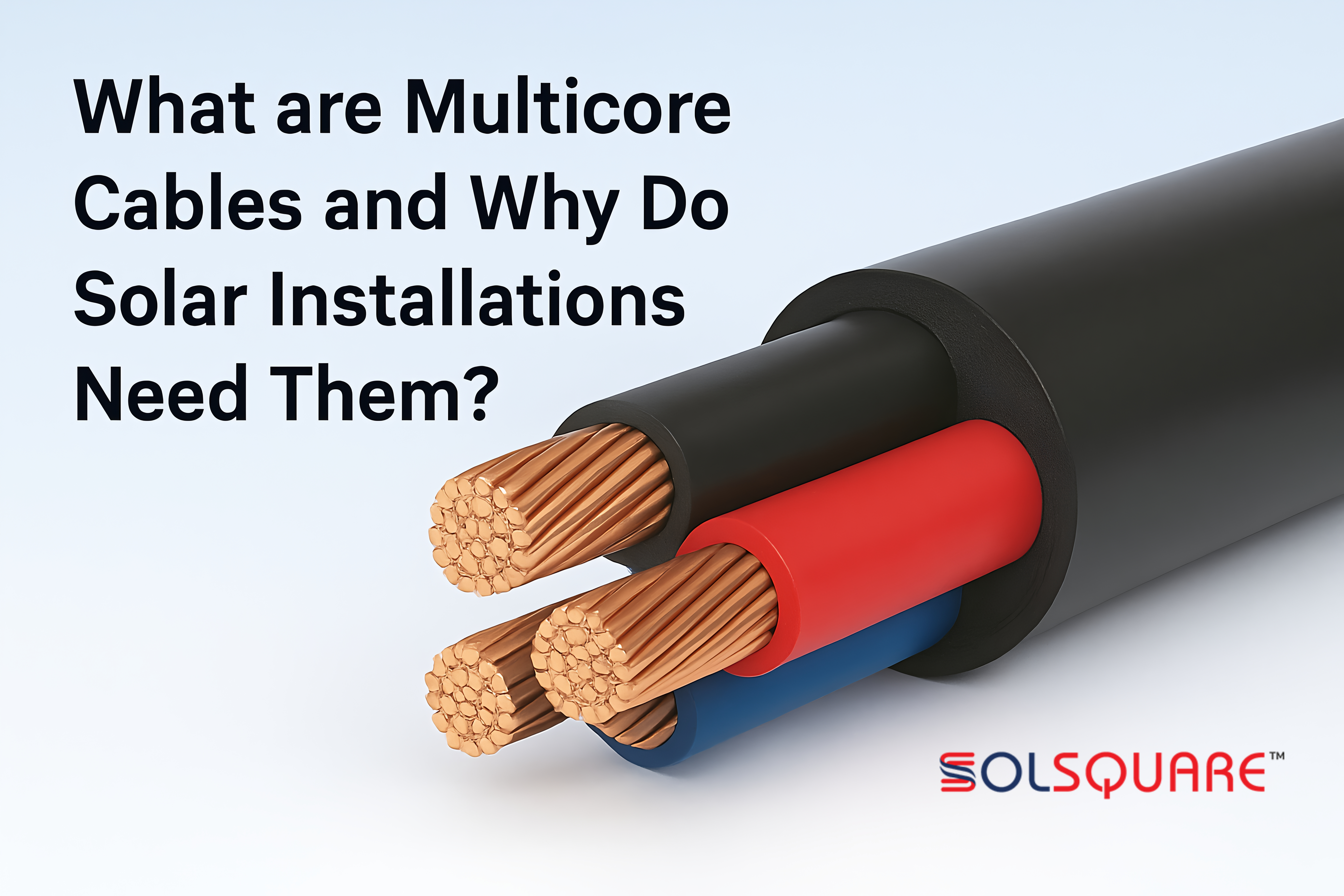
Multicore cables are cables consisting of several insulated conductors (or cores) bundled up in one single outer sheath. Each of the cores is able to carry electrical power or signals independently and are thus ideal for installations which require several connections to run simultaneously—such as in solar installations.
Unlike traditional single-core wires, where each wire needs separate installation and routing, multicore cables simplify the process by integrating multiple connections into one neatly organized cable.
Why We Use Multicore Cables in Solar Installations?
The system of solar power has different components—solar panels, inverters, batteries, charge controllers, and so on. For efficiency, proper device interconnection is needed. It is here that multicore cables are employed.
Here’s why multicore cables matter in solar applications:
- Less Cable Clutter:
Instead of having to use several single-core wires between component and component, you use a single multicore cable to do the job. It keeps the installation neater and less complicated. - Simplified Installation:
It is also easier and quicker to handle and install a single cable containing multiple conductors than to install numerous individual wires. - Enhanced Safety and Durability:
Multicore cables minimize the likelihood of wiring errors, exposed conductors, and bunched connections—all factors improving safety and minimizing long-term maintenance. - Space-Saving in Tight Installations:
Particularly in roof-mounted or wall-mounted installations, where space is restricted, multicore cables are able to utilize the space better without having to compromise power transmission. - Enhanced Performance in Extreme Conditions:
High-grade multicore cables for solar are made of UV-resistant and weather-proof outer jackets. Thus, they are the best for external usage in the presence of strong sunlight, rainfall, or varying temperatures.
Construction of a Multicore Cable
One of a type which is a standard multicore cable for use in solar installations is comprised of:
- Cores (individual conductors): Tinned or plain copper. This ensures optimum electrical conductivity.
- Insulation: Very conductor to prevent shorting.
- FILL: Holds shape and adds support.
- Insulation Sheath: Secures the insulated cores.
- Jacket: Supplied with a new ergonomic design of outer jacket that gives good handling and ideal for the most arduous conditions, UV, water and abrasion resistant.
Multicore Cable for Solar Application Types
- DC Multicore Cables: Between panels and inverters; carry high-voltage DC power outdoors.
- Signal Multicore Cables: Used for sensors, communication, and instrumentation.
- Hybrid Multicore Cables: Combine power and data in one cable—ideal for smart solar systems.
Primary Benefits of Using Multicore Cables in Solar Installations
| Benefit | Explanation |
|---|---|
| Simplified Wiring | Several connections in a single cable minimize complexity. |
| Less Installation Time | One cable minimizes pulling and wiring time. |
| Cost Efficiency | Less cabling trays, accessories, and labor hours. |
| Enhanced Aesthetics | Clean, simple, and businesslike installations. |
| Increased System Reliability | Simplified maintenance and fewer breakdown points. |
Where are Multicore Solar System Cables used?
- Between solar panels and combiner boxes
- Between inverters and battery banks
- In control and monitoring systems
- In hybrid power plants for the integration of AC, DC, and communications lines
Selecting the Correct Multicore Cable for Solar Systems
- Cable Rating: Ensure support for system voltage and current.
- UV and Weather Resistance: Essential for outdoor durability.
- Fire Resistance: Meets fire safety compliance.
- Conductor Quality: Tinned copper enhances resistance to corrosion.
- Flexibility and Diameter: Easier routing in complex setups.
Practical Application
In a typical 5 kW residential rooftop photovoltaic system, there may be a multicore DC cable between the inverter and the array of panels carrying positive and negative DC wires and grounds within one jacket. It replaces three separate cables and keeps the system neater and secure.
Why Multicore Cables Are a Smart Choice for Solar
- Multicore cables have multiple conductors in the same protection sheath.
- They are ideal for solar systems that need multiple connections in limited space.
- They reduce wiring errors, installation time, and maintenance in the future.
- Selecting the appropriate multicore cable increases the lifespan and efficiency of your solar system.
FAQs
Conclusion
As the solar technology evolves, clean and efficient wirings will be more critical than ever. Selecting the correct multi-core cable for solar systems can be summed up as being an easy step with a great performance, safety and cost-effective impact.
Whether you are intending to fit a new solar project, or upgrade an existing one; speak to your installer/cable provider so you choose the best multicore cable, depending on your requirements.