7 Qualities To Consider Before Buying Electrical Wire
Among the parts of the house that are absolutely necessary, electrical wiring is the one which is most frequently forgotten in the process of building or renovating.
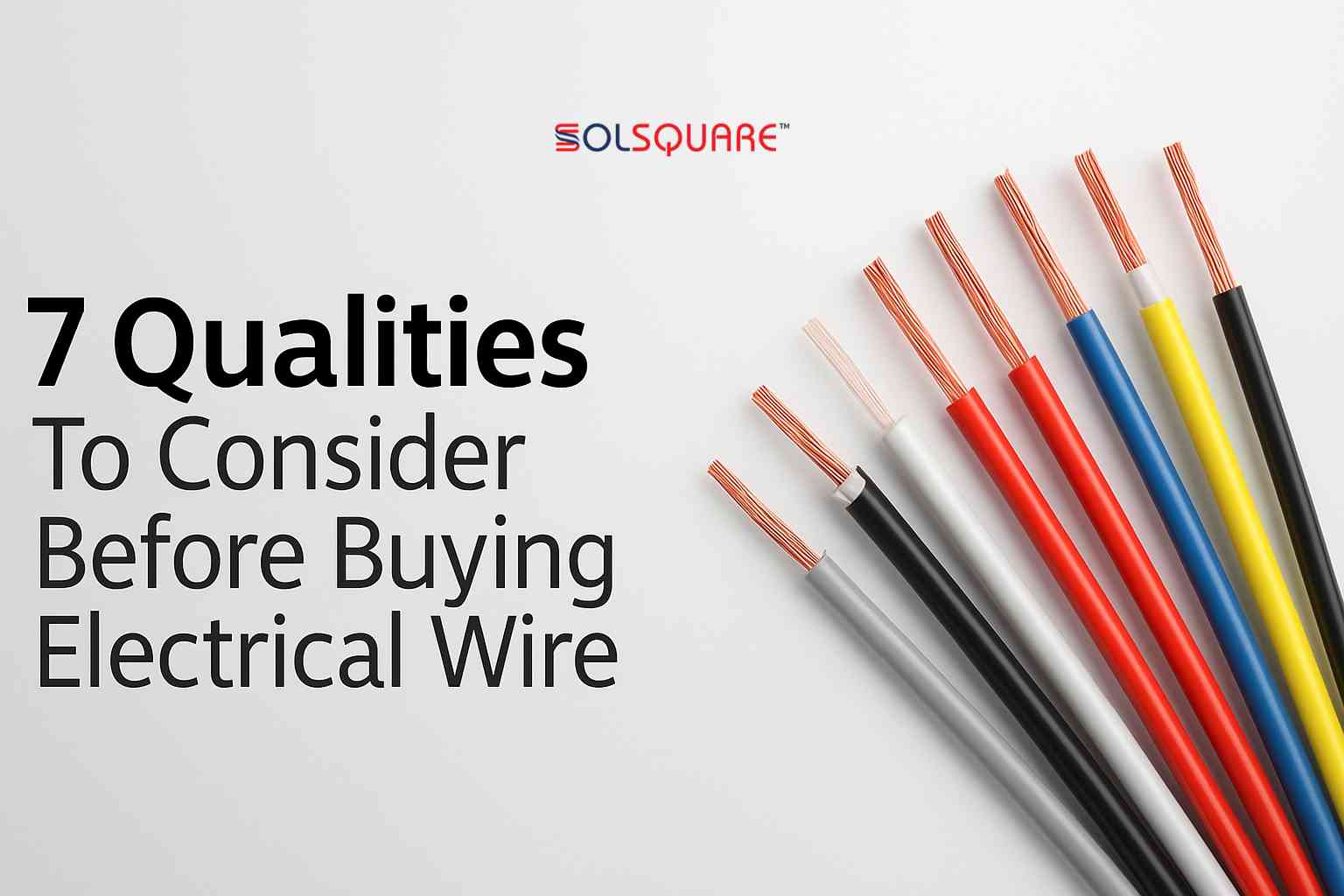
Among the parts of the house that are absolutely necessary, electrical wiring is the one which is most frequently forgotten in the process of building or renovating. In general, people are more concerned with the changes, the lights, or the ornamental fittings, whereas it is the wires that are concealed behind the walls that carry the actual load and are the ones that guarantee the safety of the whole electrical system.
The correct choice of wire not only saves your appliances but also electrifies the environment lessening the chances of fire, short circuit, and power loss. To make your decision both safe and dependable, the seven most significant characteristics with a brief explanation and well-organized paragraphs are presented to you.
1. Conductor Material
The conductor material is essentially the heart of a wire that carries electricity. It is the main factor that decides how effectively the electricity will flow through it and how the wire can be safely used under different loads. Out of all the conductor materials, copper is generally considered the best for residential wiring.
Copper of the highest quality made wires provide very good electrical conductivity which is the main reason why they are the most energy-efficient. In addition, copper wires have a high tensile strength which makes them very durable and less likely to snap during the process of the installation. Aluminium or CCA (copper-coated aluminium) wires might be more affordable, but they are less safe as they can overheat quicker, transfer electricity less efficiently, and their lifespan is shorter. Therefore, if you care about the safety and performance of your electrical system in the long-running future, then you must only buy 100% pure copper multi-strand wires, especially for homes where the power consumption is on the rise every year.
2. Insulation Type and Fire Safety
The insulating layer is that which shields the wire from outside harm, stops electric shocks, and lowers the possibility of a short circuit. In fact, good insulation even puts out a very significant role in a fire situation. Out of all the different kinds of insulation, PVC (Polyvinyl Chloride) is the one that is mostly used, simply because it is quite cheap and it has a little bit of heat resistance. Nevertheless, it is better to use FR (Flame Retardant) and FRLS (Flame Retardant Low Smoke) wires if you are looking for safer home wiring. FR insulation retards the fire spread while FRLS insulation emits very little smoke and that smoke is not much toxic, thereby giving more time to get away from the fire and lessening the difficulty of breathing.
In a home where there are kids or aged people, and in multi-storied houses or buildings that are over crowded, FRLS wires are the best choice for safety. Besides this, good insulation also has the ability of being resistant to hygrometry, oil, chemicals, and temperature changes, thus it keeps the wire still functional after many years.
3. Wire Size and Load Capacity
The size or gauge of the wire is another important factor that directly affects its performance. The wire size must match the electrical load of the device or circuit it will support. In most Indian homes, 1 sq. mm to 6 sq. mm wires are commonly used, with smaller sizes suitable for lights and fans and larger sizes necessary for heavy appliances like air conditioners, geysers, and microwaves. Employing a wire that is too thin for a high-load device may cause the wire to get very hot, the voltage to drop, and ultimately, fire to start in the electrical system.
If you however, select a size that is far larger than what is needed, you will just be increasing your expenses without a good reason. So the right decision must take into account both the wiring plan and how much current each branch will be able to carry. If you are not sure about the right wire size, it is better that you hire an electrician to help you instead of risking the consequences that can follow over time.
4. Flexibility and Stranding of Copper
Another feature that you should definitely consider, when purchasing an electrical wire, is the pattern of the strands. The stranding pattern is the number of the small copper strands that are twisted together in the wire. Multi-strand copper wires can be bent and twisted a lot more than single-strand wires, thus the installation process can be done faster and easier, especially if you want to put the wires in a conduit or in a tight corner.
Also, flexible wires are more vibration-resistant and hardly ever get cracked. Moreover, finer strands have better conductivity and less heat is generated. On the other hand, single-strand wires are stiff, difficult you to handle and over time they will develop cracks. As multi-strand flexible wires are always the better option, since modern home wiring is full of bends and you hide the wires in walls, you should choose them.
5. Voltage Rating and Current Handling
Every electrical wire is inherently made in a way to accommodate a certain amount of voltage and current. The said amount of voltage is referred to as the wire's voltage rating while the current-carrying capacity is the maximum amount of current the wire can carry safely. In the case of normal household wiring in India, wires with a voltage rating of 1100 volts are the most common. Such wires are technically perfect for any domestic use, thereby making sure that the wire stays safe even when there are voltage fluctuations.
The current-carrying capacity is a variable that is solely dependent on the thickness of the conductor as well as the quality of the insulation. When a wire incapable of carrying the specified current is forced to do so, it will get heated which can eventually cause the insulation to be damaged, short circuits, and even fire.
It is of utmost importance to always confirm whether the wire is up to standard by checking the manufacturer's specification sheet for the ratings of the appliances and circuits you intend to use. It is definitely worth the extra money and effort to get a wire with a slightly higher capacity than just enough to meet the minimum requirement.
6. Safety Certifications and Quality Marks
The electrical wires should be of such a kind that they conform to the safety regulations laid down by national and international authorities. In the case of wires, it is highly recommended that you first ascertain whether the product bears certification marks such as the ISI (Indian Standards Institute) mark, which is the mark that ensures that the wire meets the safety standards set by BIS.
A few more labels like rohs indicate that the cable is free of harmful substances while iso certificates denote the quality of a steady manufacturing process. Truly certified wires are subjected to rigorous tests for heat resistance,Fire safety,insulation durability, and load handling.
On the other hand, locally made cheap wires without any proper certification may also be of the substandard quality of the like of which the vendors are usually in the habit of using for these kinds of wires i.e., they may be using low-grade copper, poor insulation, or incorrect thickness without your knowledge. These wires may be of the same outward appearance but at the same time can be very dangerous internally. So as a precaution against your own home and family never opt for another than wires on which you can easily and definitely confirm safety certification from the packing.
7. Brand Reliability and Warranty
One of the major factors that determine the quality of an electrical wire is the brand reputation. Brands that have been around for a long time are known to adhere to very strict quality standards, use pure copper and provide reliable insulation materials in their products. They also give a warranty and support in case there is a defect in the product.
Moreover, unbranded or counterfeit cables might appear to be less expensive from time to time, but they are very compromising as to the purity of the copper, the thickness of the insulation, and the safety levels. Hence, they can lead to the failure of the devices, the increase of electricity consumption, and even the occurrence of fire hazards after a prolonged period.
As a result, a brand that is trustable will assure you long-term performance, accurate meter marking, and consistency in every coil. In case you are buying wires for your new home or renovation, it is thus important that you get them from a trustworthy brand so that you can have a year ofmind.
FAQs
Conclusion
Purchasing electrical wires can be perceived as a minor task in the whole building plan, however, it significantly affects the safety, the energy-efficiency, and the longevity of your house. Knowing the necessary features, for instance, the purity of the conductor, the type of the insulator, the wire gauge, the wire being stranded or solid, the voltage rating, the certifications, and the trustworthiness of the manufacturer, will allow you to take a wise decision which will be safeguarding both your family and your electrical appliances.
It is not wiring that you change frequently; it is the one that stays in your walls for a long time. That is why it is so important to pick the right wire from the very beginning. A top-quality copper wire with the right insulation may be a little bit more expensive, but it is definitely safer in the long run and it also gives you the comfort of mind.
The only rule to follow when dealing with electrical wires is that you should never lower the quality standard. The safety of the user is at stake.
Note: This guide is intended for informational purposes only. Always consult a certified electrician for installation, repair, or inspection.